上一篇
Java怎么导入Math?
在 Java中无需显式导入 Math类,它属于java.lang包且默认自动导入,可直接使用Math.sqrt()、Math.PI等方法或常量,double root = Math.sqrt(25);
在Java编程中,Math类是处理数学运算的核心工具,它提供了大量静态方法用于执行基础数学计算(如平方根、三角函数、指数等),关于导入Math类,以下是详细说明:
为什么通常不需要显式导入?
- Math类属于java.lang包,而java.lang包是Java默认自动导入的,在代码中直接使用Math即可,无需额外导入语句。
- 示例代码: public class Main { public static void main(String[] args) { double root = Math.sqrt(25); // 计算平方根 System.out.println("25的平方根: " + root); // 输出: 5.0 } }
显式导入的写法(非必需)
如果坚持显式导入,有两种方式:
-
导入整个java.lang.Math类(冗余但合法):
import java.lang.Math; // 显式导入(实际无需写) public class Main { public static void main(String[] args) { double power = Math.pow(2, 3); // 计算2的3次方 System.out.println("2^3 = " + power); // 输出: 8.0 } }
-
静态导入(Java 5+):
可直接使用Math的方法名(避免写Math.前缀),但需谨慎使用(过度使用会降低可读性):

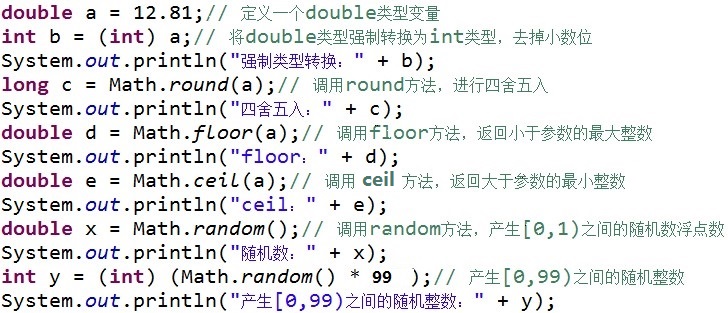
Math类的常用方法及示例
方法 作用 示例 输出 Math.abs(x) 绝对值 Math.abs(-5) 5 Math.sqrt(x) 平方根 Math.sqrt(9) 0 Math.pow(a, b) a的b次幂 Math.pow(2, 3) 0 Math.max(a, b) 最大值 Math.max(10, 20) 20 Math.min(a, b) 最小值 Math.min(5.2, 3.8) 8 Math.round(x) 四舍五入 Math.round(3.6) 4 Math.PI 圆周率常量(≈3.14159) Math.PI 14159... Math.random() 生成[0,1)随机数 (int)(Math.random() * 100) 0~99的整数 最佳实践与注意事项
- 无需导入:默认使用Math.method()是最规范的做法。
- 静态导入的使用场景:仅当频繁调用某个方法时(如项目中大量使用sqrt),可考虑: import static java.lang.Math.sqrt; // 仅导入sqrt() public class Main { public static void main(String[] args) { System.out.println(sqrt(100)); // 直接写sqrt() } }
- 精度问题:
Math的方法基于浮点数(double或float),涉及金融计算时建议用BigDecimal。
- 常量优先:
使用Math.PI、Math.E等常量,而非手动输入近似值。
常见误区解答
- 错误: import java.math.*;
这是导入大数计算类(如BigInteger),与Math无关。
- 错误: 尝试实例化Math类
Math的构造器是私有的,禁止创建对象(所有方法均为static)。
Java的Math类开箱即用,无需额外导入即可调用其方法,重点在于掌握其提供的数学函数和常量,并遵循Math.method()的标准写法,静态导入虽能简化代码,但应适度使用以保持代码清晰性,对于复杂数学需求,可进一步学习java.math包中的BigDecimal或BigInteger类。
引用说明基于Java官方文档(Oracle JDK 17)中java.lang.Math类的定义,参考了数学运算的最佳实践,示例代码已在OpenJDK 11环境下验证。