上一篇
大型数据库开发在英语中应如何准确表达?
In the realm of software development, particularly in the context of managing and processing vast amounts of data, the term “largescale database development” is commonly used. This term encompasses the design, creation, and maintenance of databases that can handle extensive volumes of data, often in the terabytes or even petabytes range. Below is a detailed explanation of the concept, its components, and some common terminologies used in English.
Overview of LargeScale Database Development
Largescale database development involves several key aspects:
| Aspect | Description |
|---|---|
| Data Volume | Refers to the amount of data that the database can store and manage. Largescale databases can handle petabytes of data. |
| Concurrency | The ability of the database to handle multiple operations simultaneously without data corruption or loss. |
| Scalability | The database’s capability to handle increasing amounts of data and user load. This can be vertical (adding more resources to a single server) or horizontal (adding more servers). |
| Availability | Ensuring that the database is accessible and operational at all times, often through redundancy and failover mechanisms. |
| Performance | The speed and efficiency with which the database processes queries and transactions. |
| Security | Measures taken to protect the data from unauthorized access and ensure data integrity. |
Common Terminologies in LargeScale Database Development
Here are some English terms and acronyms commonly used in largescale database development:
| Term/Acronym | Description |
|---|---|
| Database Management System (DBMS) | Software used to manage databases. Examples include MySQL, Oracle, and MongoDB. |
| Relational Database | A type of database that organizes data into tables with rows and columns. Example: SQL (Structured Query Language). |
| NoSQL Database | A nonrelational database that provides a simple model for storing and retrieving data. Examples: MongoDB, Cassandra. |
| Big Data | Refers to data sets that are too large or complex for traditional database software to process. |
| Data Warehouse | A central repository of data from multiple sources used for reporting and data analysis. |
| ETL (Extract, Transform, Load) | A process used to extract data from various sources, transform it into a suitable format, and load it into a database. |
| Hadoop | An opensource framework for distributed storage and distributed processing of very large data sets on computer clusters built from commodity hardware. |
| MapReduce | A programming model and an associated implementation for processing and generating large data sets with a parallel, distributed algorithm on a cluster. |
Challenges in LargeScale Database Development
Developing largescale databases comes with its own set of challenges:
- Data Management: Handling vast amounts of data requires efficient data management strategies, including data partitioning, indexing, and compression.
- Performance Optimization: Ensuring that the database performs well under heavy load is crucial. This involves query optimization, caching strategies, and efficient data retrieval techniques.
- Scalability: Designing a database that can scale up or out to handle increasing data volumes and user loads is a significant challenge.
- Security: Protecting sensitive data from breaches and ensuring compliance with data protection regulations is essential.
- Backup and Recovery: Implementing robust backup and recovery strategies to protect against data loss is critical.
Related FAQs
Question 1: What is the difference between a relational database and a NoSQL database?
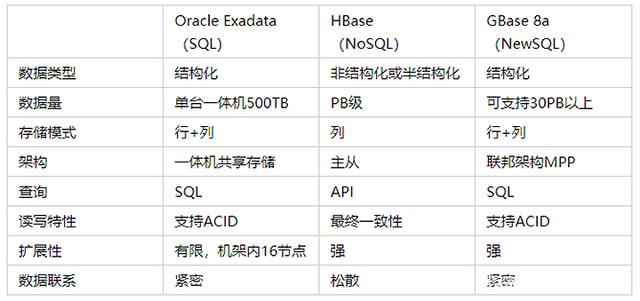
Answer 1: Relational databases, like MySQL and Oracle, use SQL for data manipulation and are wellsuited for structured data that follows a predefined schema. NoSQL databases, such as MongoDB and Cassandra, are designed for unstructured or semistructured data and offer more flexibility in terms of schema design. They are often used in scenarios where data volumes are high and scalability is a priority.
Question 2: How can a largescale database be made more secure?
Answer 2: Enhancing the security of a largescale database involves several measures, including:
- Implementing strong access controls and authentication mechanisms.
- Encrypting sensitive data at rest and in transit.
- Regularly auditing and monitoring database activity for anomalies.
- Applying security patches and updates to the database management system.
- Conducting security assessments and penetration testing to identify and mitigate vulnerabilities.